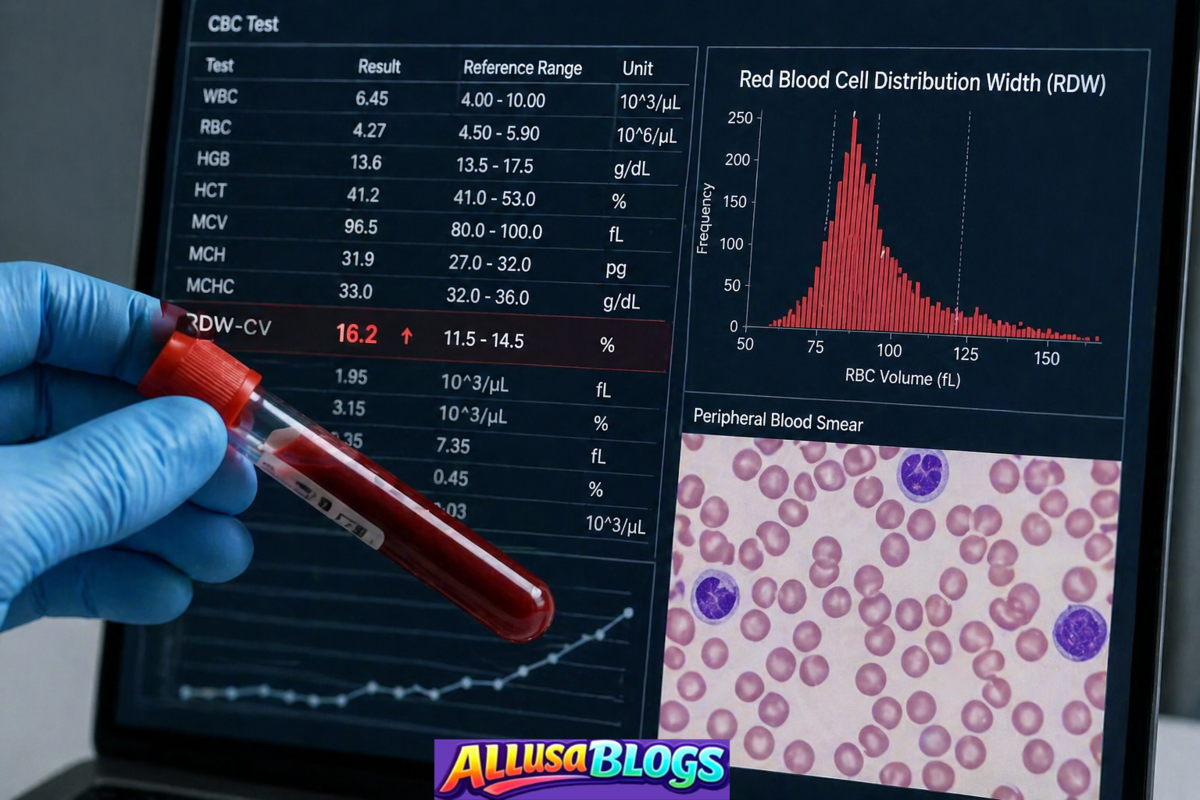
Red blood cell distribution width (What Level of RDW Is Dangerous) is a key part of a standard blood test, yet many people don’t fully understand what it means or why it matters. If you’ve recently had blood work done and noticed a high RDW value, it’s natural to feel concerned. So, what level of RDW is dangerous, and when should you take action?
This guide breaks down RDW in simple terms, explains what levels are considered risky, and highlights warning signs you should never ignore. By the end, you’ll have a clear understanding of what your results may indicate and when to seek medical advice.
Understanding RDW and Why It Matters
RDW measures the variation in the size of your red blood cells. In a healthy body, red blood cells are fairly uniform in size. However, when there is a significant variation—some cells larger or smaller than normal—your RDW increases.
This measurement is usually reported as part of a complete blood count (CBC). It doesn’t diagnose a condition on its own, but it provides valuable clues when combined with other markers like hemoglobin and mean corpuscular volume (MCV).
A normal RDW typically falls between 11.5% and 14.5%, although slight variations may occur depending on the lab. Values outside this range may indicate underlying health issues that require further evaluation.
What Level of RDW Is Dangerous?
When asking what level of RDW is dangerous, it’s important to understand that RDW itself isn’t inherently “dangerous.” Instead, it signals potential problems in the body.
Generally, an RDW above 14.5% is considered high. Mild elevations may not be serious, but significantly elevated levels—especially above 16%—can indicate more concerning conditions. The higher the RDW, the greater the variation in red blood cell size, which often points to underlying disorders.
However, RDW must always be interpreted alongside other blood values. For example, a high RDW with low hemoglobin could suggest iron deficiency anemia, while a high RDW with normal hemoglobin might indicate early nutritional deficiencies.
Causes of High RDW Levels
Several health conditions can cause an increase in RDW. Understanding these causes helps explain why monitoring RDW is important.
One common cause is nutritional deficiency. Lack of essential nutrients like iron, vitamin B12, or folate can disrupt red blood cell production, leading to uneven cell sizes. Conditions like vitamin B12 deficiency and folate deficiency are frequent culprits.
Chronic diseases can also elevate RDW. Disorders such as chronic kidney disease and liver disease often affect red blood cell production and lifespan. Additionally, inflammatory conditions and infections may contribute to abnormal RDW values.
In more serious cases, high RDW can be linked to bone marrow disorders or blood-related diseases like myelodysplastic syndromes, where the body produces abnormal blood cells.
Low RDW: Is It a Concern?
While much attention is given to high RDW, low RDW levels are generally not considered dangerous. A low RDW simply means that your red blood cells are uniform in size, which is typically a sign of good health.
However, RDW should always be interpreted in context. If other blood parameters are abnormal, even a normal or low RDW might still be part of a larger issue that needs investigation.
Warning Signs You Should Never Ignore
If your RDW is elevated, your body may already be showing symptoms of an underlying condition. Recognizing these warning signs early can help prevent complications.
Persistent fatigue is one of the most common symptoms. When red blood cells are not functioning properly, your body may struggle to deliver oxygen efficiently, leaving you feeling tired and weak.
Shortness of breath, dizziness, and pale skin are also common indicators of blood-related issues. These symptoms are often associated with conditions like anemia, which frequently correlates with high RDW levels.
Other warning signs include rapid heartbeat, chest discomfort, and unexplained weight loss. If you experience any combination of these symptoms along with abnormal blood test results, it’s important to consult a healthcare professional promptly.
RDW and Its Connection to Anemia

One of the most important uses of What Level of RDW Is Dangerous is in diagnosing different types of anemia. Doctors often look at RDW alongside MCV to determine the underlying cause.
For instance, a high RDW with low MCV often points to iron deficiency anemia, where the body lacks enough iron to produce healthy red blood cells. On the other hand, a high RDW with high MCV may suggest macrocytic anemia, often caused by vitamin deficiencies.
This combination of markers allows healthcare providers to narrow down the diagnosis and recommend appropriate treatment, making RDW a valuable diagnostic tool.
Can High RDW Be Linked to Serious Conditions?
Yes, in some cases, high RDW levels may be associated with more serious health issues. Studies have shown that elevated RDW can be linked to cardiovascular problems, including heart disease.
Additionally, high RDW has been observed in patients with chronic inflammation and certain cancers. While RDW alone does not confirm these conditions, it may serve as an early warning sign that prompts further investigation.
This is why doctors rarely look at RDW in isolation. Instead, they consider it as part of a broader clinical picture to determine whether additional tests are needed.
How RDW Is Tested and Interpreted
RDW is measured through a simple blood test, usually included in a complete blood count. No special preparation is typically required, although your doctor may provide specific instructions depending on your situation.
Once the results are available, your healthcare provider will evaluate RDW alongside other parameters such as hemoglobin, hematocrit, and MCV. This comprehensive approach ensures a more accurate interpretation of your overall health.
It’s important not to self-diagnose based on RDW alone. Even if your value falls outside the normal range, only a qualified medical professional can determine its significance.
When Should You Be Concerned About RDW?
You should consider RDW a concern if it is significantly elevated and accompanied by abnormal blood counts or noticeable symptoms. For example, an RDW above 16% combined with fatigue and low hemoglobin levels may indicate a serious issue that requires medical attention.
However, mild elevations without symptoms are often less urgent. In such cases, your doctor may recommend monitoring your levels over time or making dietary adjustments to address potential deficiencies.
The key is to focus on patterns rather than a single number. Consistently high RDW values over multiple tests are more concerning than a one-time fluctuation.
Ways to Improve or Normalize RDW Levels
Improving RDW levels often involves addressing the underlying cause. If nutritional deficiencies are to blame, increasing your intake of iron, vitamin B12, and folate can help restore healthy red blood cell production.
A balanced diet that includes leafy greens, lean meats, and fortified foods can make a significant difference. In some cases, supplements may be recommended under medical supervision.
Managing chronic conditions is also crucial. Proper treatment of diseases like kidney or liver disorders can help stabilize RDW levels over time. Regular check-ups and blood tests ensure that any changes are detected early.
Final Thoughts on Dangerous RDW Levels
So, what level of RDW is dangerous? While there isn’t a single number that universally defines danger, levels above 14.5%—especially those exceeding 16%—should not be ignored, particularly when paired with symptoms or abnormal blood results.
RDW is a valuable indicator of your body’s overall health, offering insights into potential deficiencies, chronic diseases, and blood disorders. Paying attention to this marker can help you catch problems early and take proactive steps toward better health.
If you notice unusual symptoms or receive abnormal test results, don’t delay seeking medical advice. Early intervention can make a significant difference in diagnosing and managing underlying conditions effectively.